To protect our client, we don't disclose the brand name, creator names, or absolute figures such as spend and impressions. Everything here is shown as ratios and relative comparisons.
When a brand launches a new product, it usually puts the most effort into its official ad creatives. The product looks great, the message is precise, and the tone is unmistakably on brand.
But on the TikTok feed, the videos that actually made people stop were not necessarily the ones made that way.
Using first-week data from a global food brand's new product launch, this post looks at what happens when creator videos made through seeding are reused as ads.
1. The campaign ran on three tracks at once
We designed the campaign around three tracks from the start.
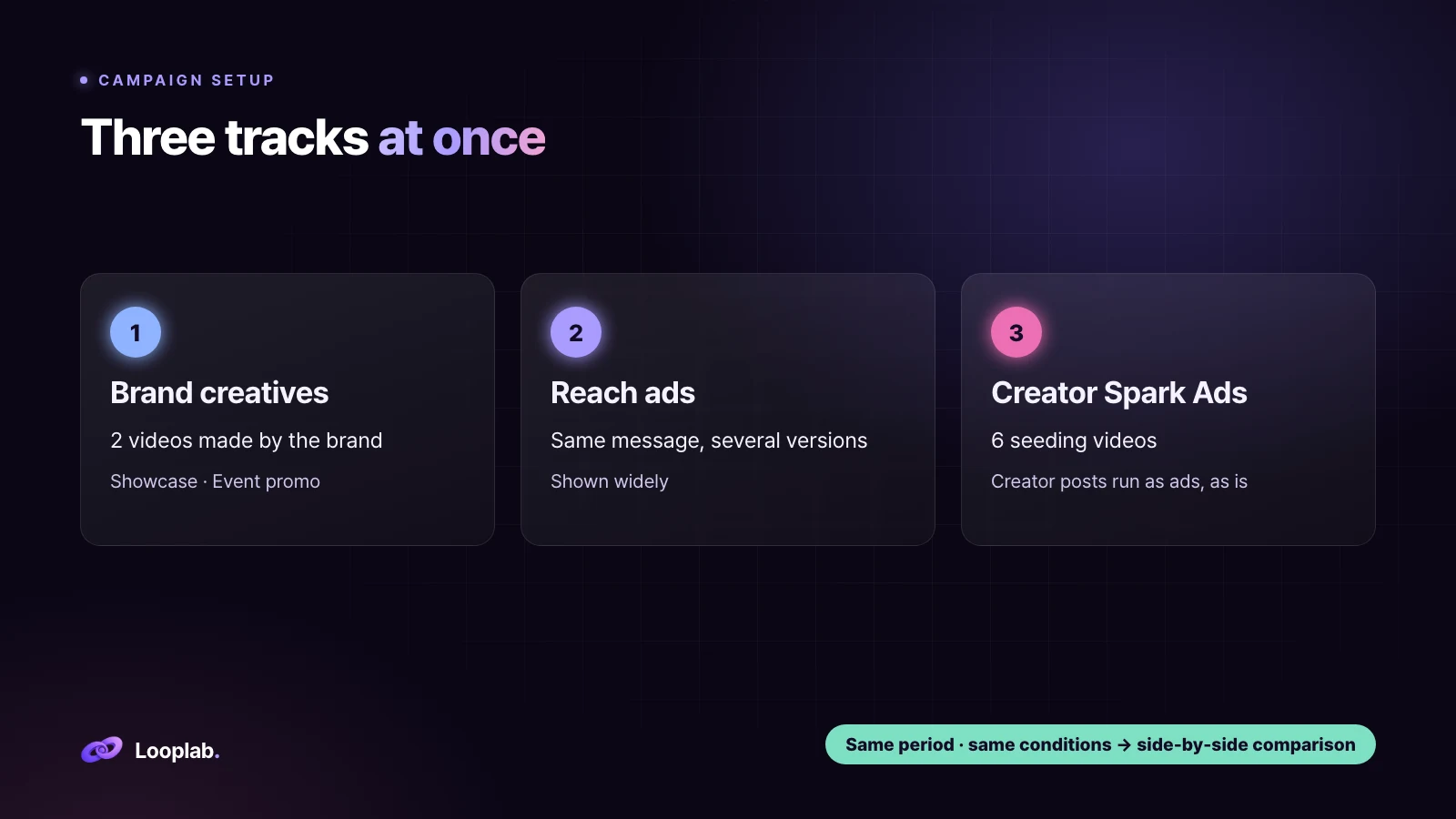
Brand creative ads: Two videos made by the brand itself. One was a product showcase, the other promoted a participation event.
Reach ads: The same message split into several versions and shown widely.
Creator Spark Ads: Six creator videos posted through seeding, boosted as ads.
Spark Ads show a post from the creator's own account as an ad, exactly as it is. It doesn't look like an ad, and the likes and comments it earns stay on the original post.
The key point is that we ran brand creatives and creator creatives over the same period, under the same conditions. That's the only way to compare them side by side.
2. The brand creatives did well on reach
Looking only at first-week results, the brand creatives did their job.
Their cost per thousand impressions (CPM) was among the lowest. Average frequency was around 1.1, so instead of showing the same people the ad again and again, it spread cleanly to new people.
On CPM alone, the brand creatives won. Most campaign reports stop right here.
3. But most people swiped away within 2 seconds
Look at how long people actually watched, and the picture changes completely.
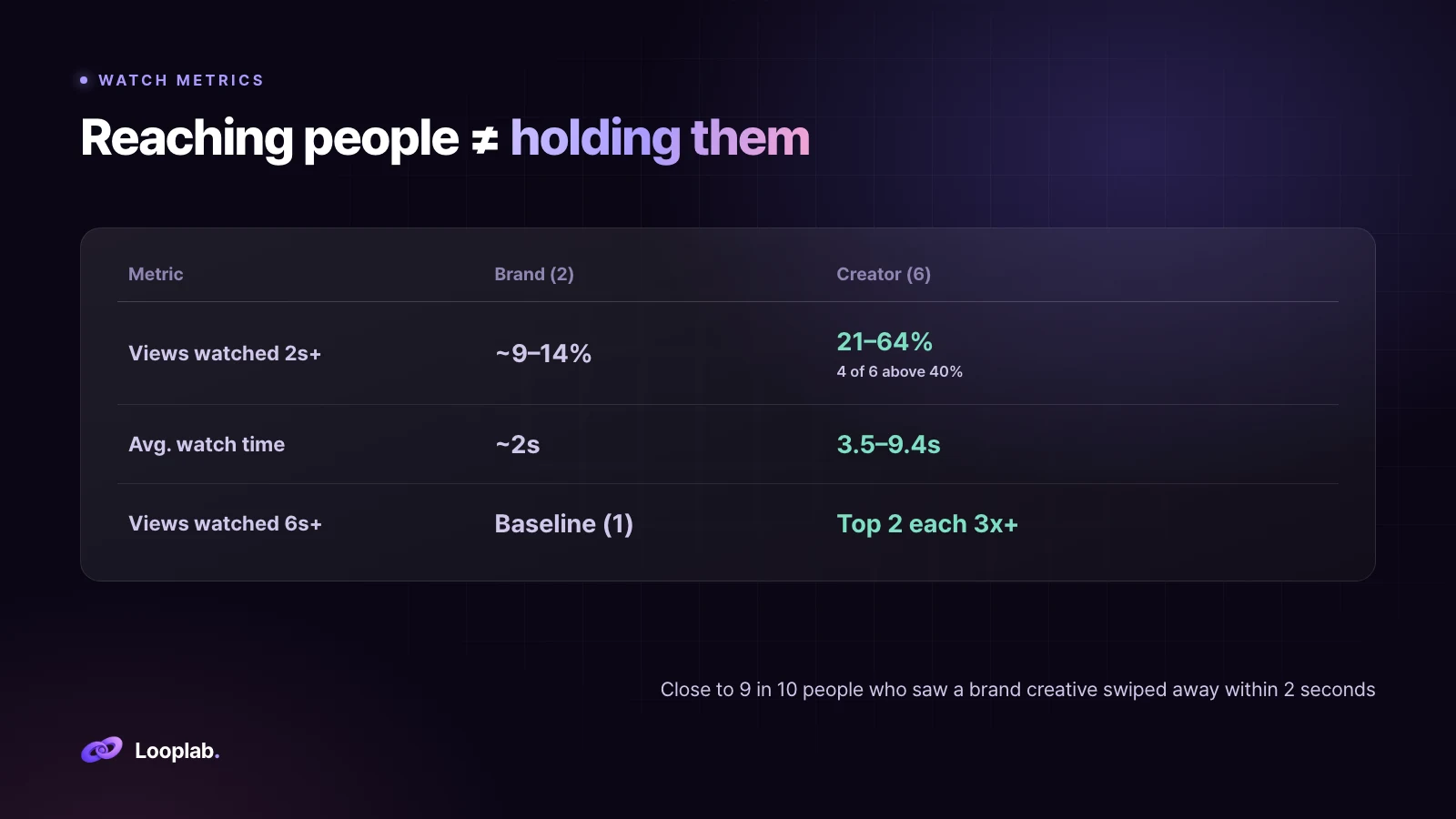
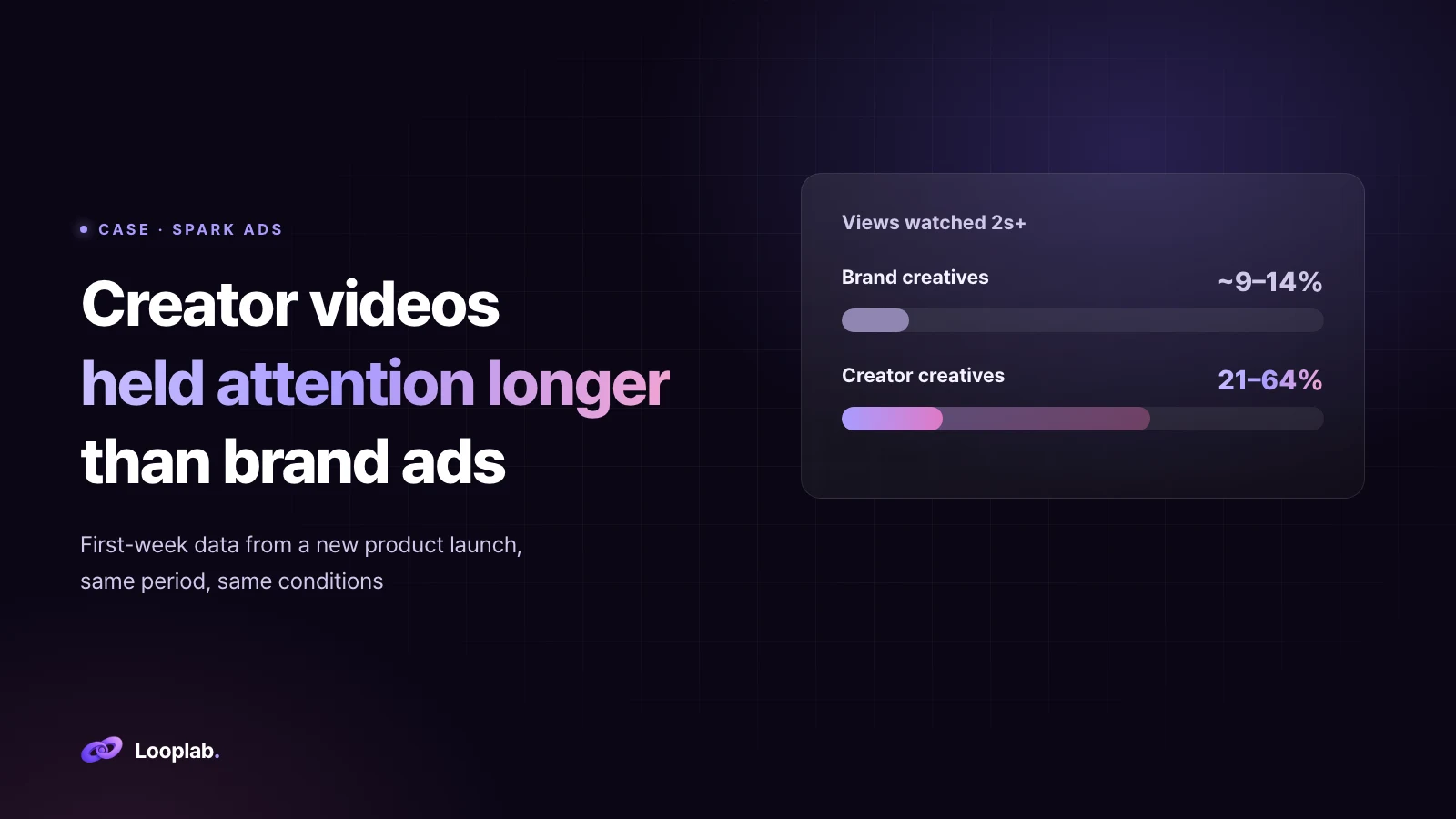
Share of views watched 2 seconds or more: brand creatives about 9–14% · creator creatives 21–64% (4 of 6 above 40%)
Average watch time: brand creatives about 2 seconds · creator creatives 3.5–9.4 seconds
Views watched 6 seconds or more: the top two creator creatives each delivered over 3x the brand creative
Close to nine in ten people who saw a brand creative swiped away within 2 seconds. It reached them, but it didn't hold them.
The top creator creatives, on the other hand, were watched for 7–9 seconds on average. In a fast-scrolling feed, that means people were following the video to the end.
4. The most expensive impressions turned out to be the cheapest attention
The most interesting case was the creative with the highest CPM.
One creator creative had the highest CPM of all six. Judged by CPM alone, it's the one we would have cut. Yet it ranked first on both 2-second view rate and average watch time.
Recalculated as cost per view watched 6 seconds or more, this creative came in at about one-fifth of the brand creative. It used roughly two-thirds of one brand creative's budget, yet delivered more than three times as many 6-second views.
CPM tells you how cheaply something was shown. What an advertiser actually needs to know is how cheaply it was watched.
5. The difference came from how the videos speak
Same product, same period, same target. What made the difference was the way each video spoke.
Opening shot: The brand creatives opened on the product. The creator creatives opened on a face and a voice. On the feed, people stop for people first.
Tone: The creator videos sounded like a recommendation, not an ad. The same information can be a swipe or a watch-to-the-end depending on who says it and how.
Number of messages: The brand creatives carried two messages. Six creators told the product story in six different ways, and the data showed right away which words drove a response.
It's the same point we made in Seeding Starts With the Message, now confirmed in ad data.
6. So we gave each creative its own role
We didn't conclude that the brand creatives should be switched off. Instead, we decided to look at each creative's role differently.
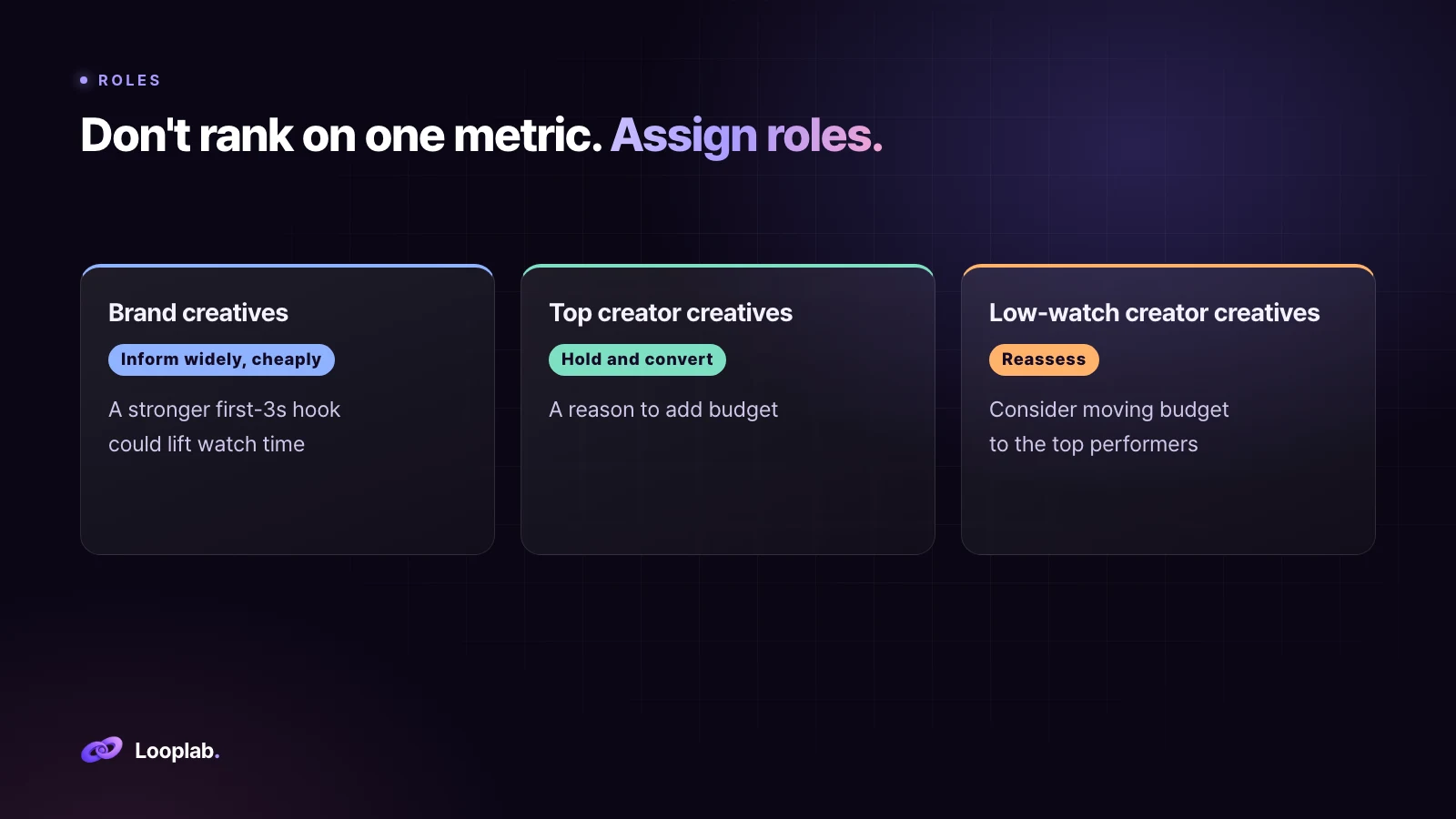
Brand creatives: Inform widely and cheaply. That said, a stronger hook in the first 3 seconds could lift watch time a lot.
Top creator creatives: Hold attention and turn interest into action. We now had a reason to put more budget behind them.
Creator creatives with low watch time: Even among creator creatives, results varied. We looked at moving budget from the weaker ones to the stronger ones.
The point is not to rank every creative on a single metric, but to judge each one on the job it's meant to do.
7. Five things to check when reusing seeding videos as ads
Get ad usage rights at the recruiting stage. Asking for Spark Ads rights after a video takes off drags out the negotiation. Putting it in the initial terms is cleanest.
Pick creatives by watch metrics, not CPM. Look at 2-second view rate, average watch time, and 6-second views together.
Run brand and creator creatives over the same period. Run them separately and differences in timing and targeting get mixed in, making comparison hard.
Judge each creative by its role. Reach and attention are different jobs.
Check the ad disclosure. For sponsored content, always confirm the paid partnership label is properly turned on in the creator's post.
Seeding creates proven creatives for ads to carry
A video made through seeding isn't content that ends once it's posted. It's a creative that has already been tested once by real reactions on the feed.
Boost that creative as an ad, and the brand can spend its budget already knowing how people respond.
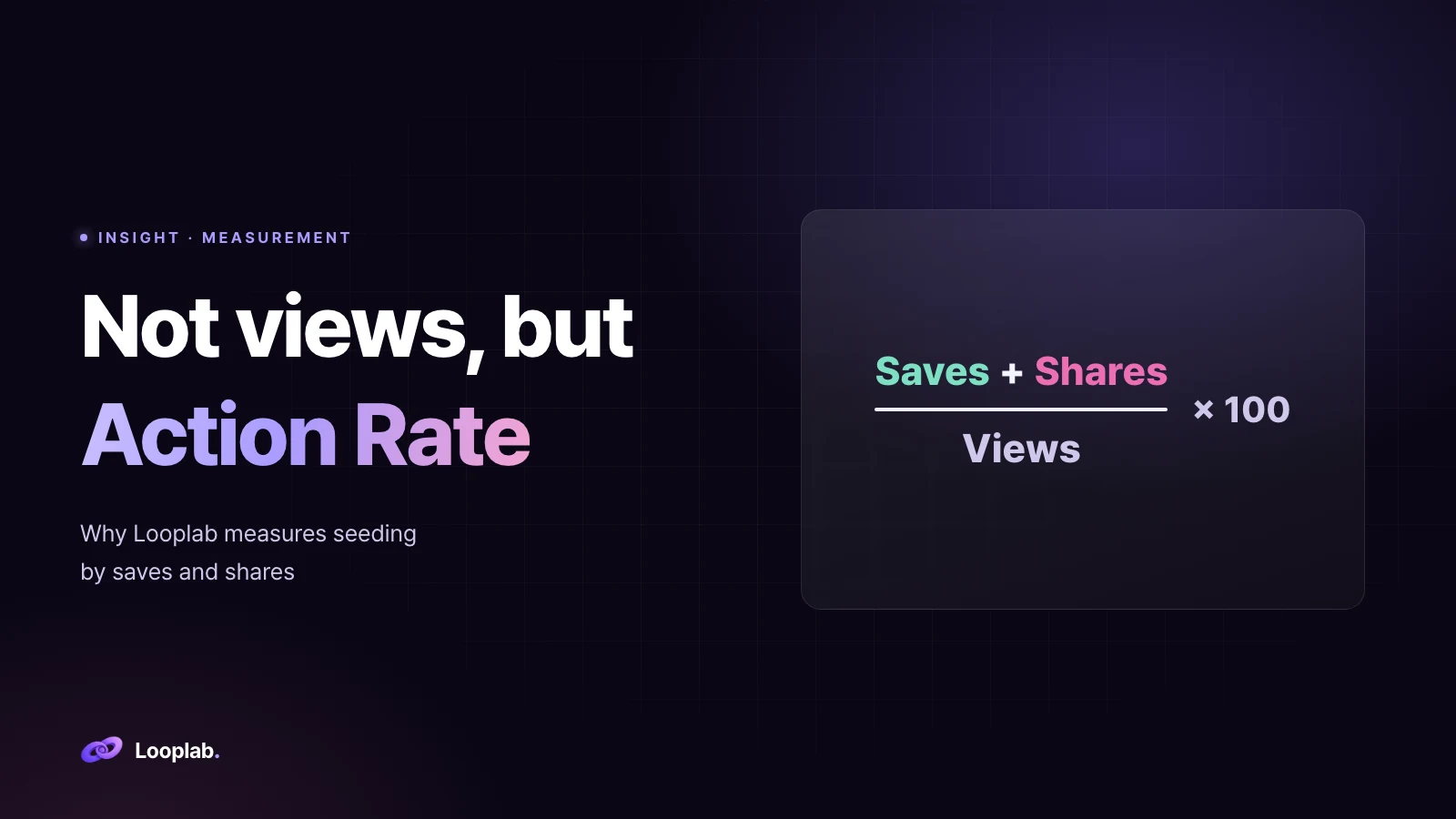
Looplab designs seeding not as a way to make lots of content, but as a way to find proven creatives and messages that carry all the way into ads. How we pick those creatives using saves and shares is covered in Not Views, but 'Action Rate'.