In a seeding campaign, most conversations with creators start in their DMs.
Many brands write a polished pitch and send the same message to dozens of creators. Then they wait.
“Why isn’t anyone replying?”
“Was the offer not good enough?”
“Are creators just too busy?”
Terms and timing matter, of course. But for creators, the reason is often simpler. They receive several similar offers a day, and it can be hard to tell which messages were actually written for them.
A creator DM is not a pitch. It is the start of a conversation that continues until the campaign ends.
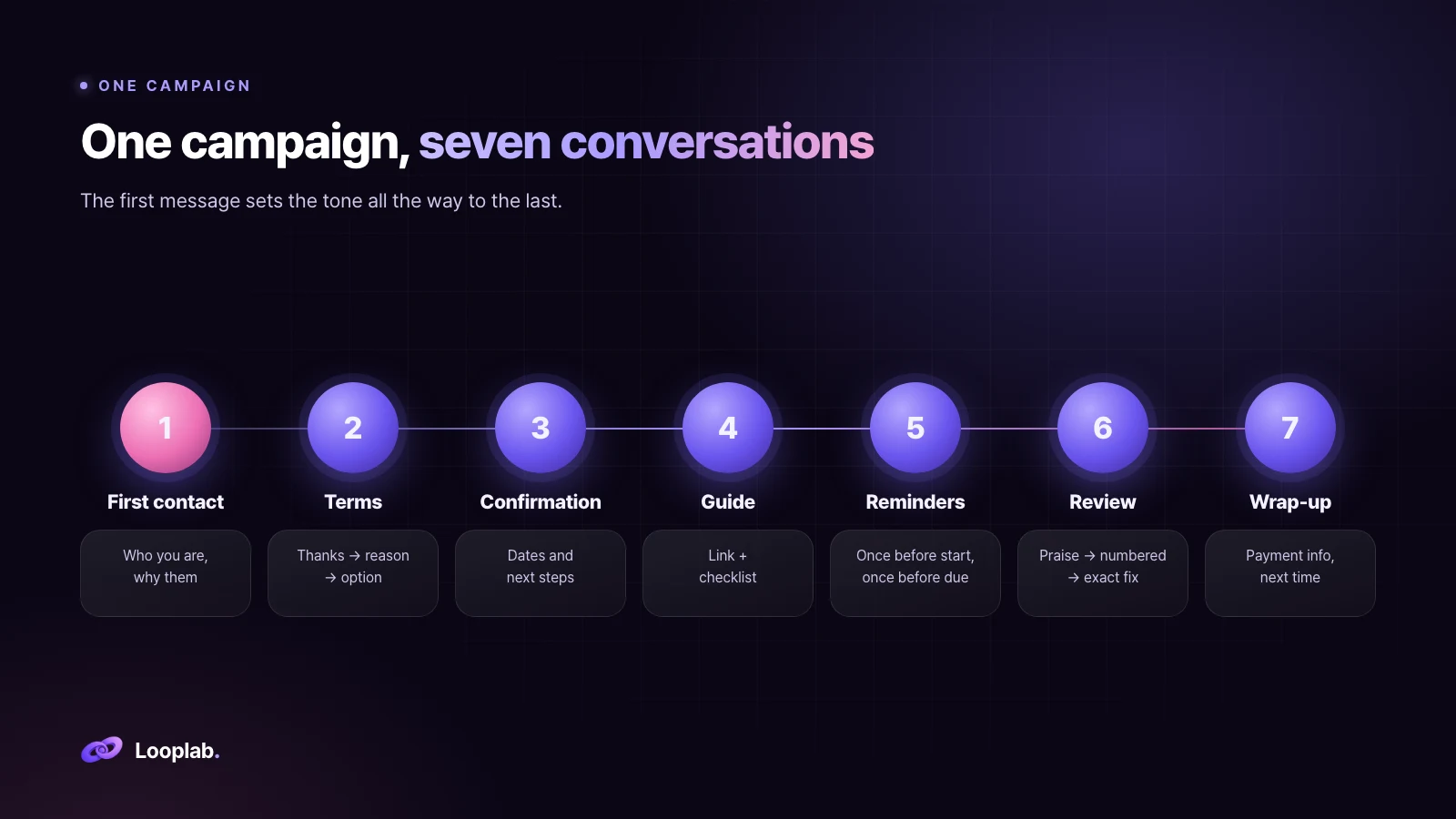
First contact, terms, confirmation, the guide, reminders, content review, and the wrap-up. You talk to a creator more often during a single campaign than you might expect. That is why the impression your first message makes lasts through the campaign.
1. Start with who you are and why you chose them
A first DM usually lands in the creator’s message requests. They decide whether to open it based on a single preview line. That first line needs to make clear that your message is not spam.
A first message that gets replies usually covers five things.
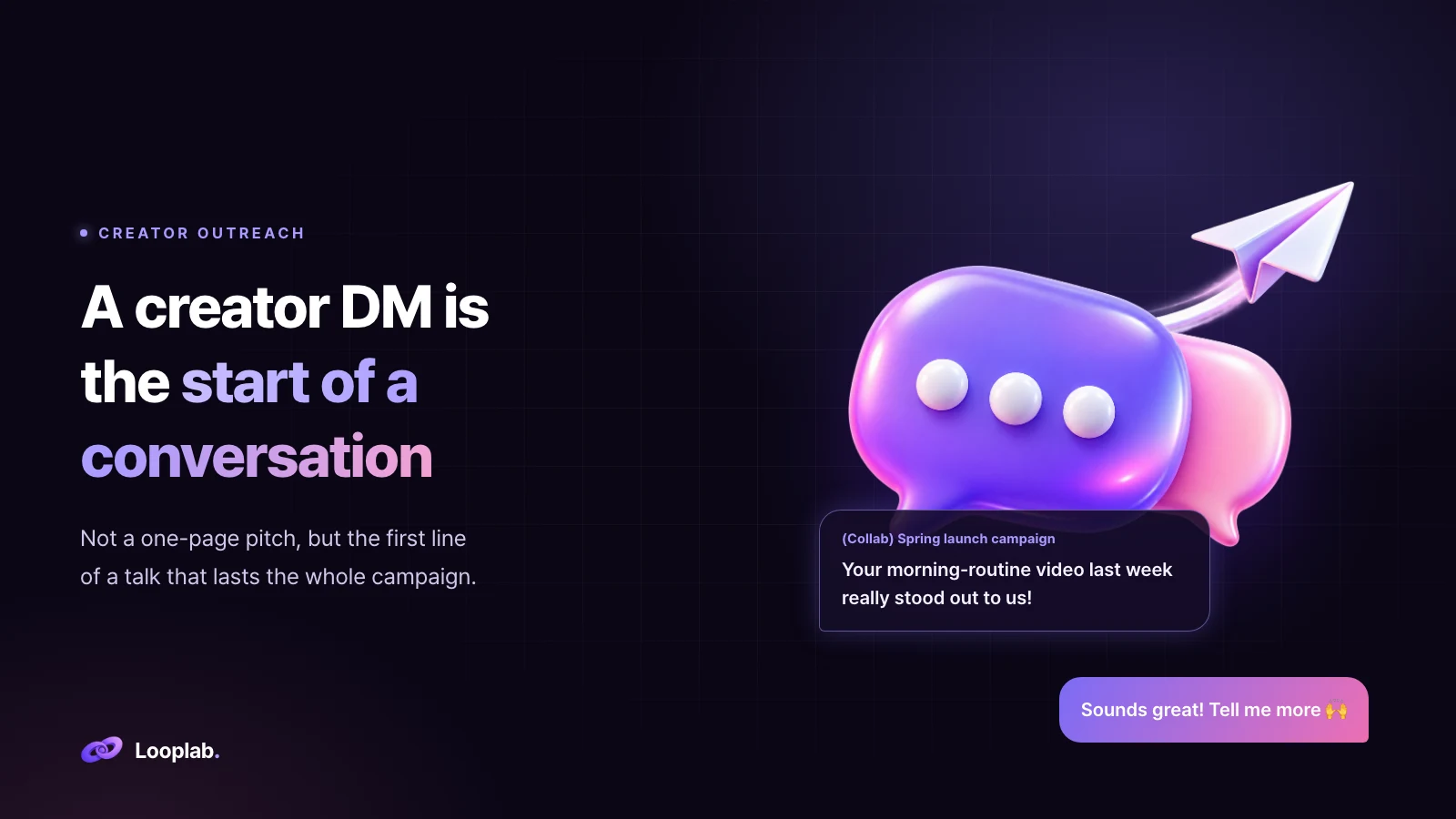
A subject line: something like “(Collab) campaign name,” so the purpose is clear
Who you are: your company and what you do, in one line
Why you chose them: one line that only someone who has watched their content could write
The campaign basics: just the product and the dates
One next step: tell them exactly what to do, like “please accept this message and reply”
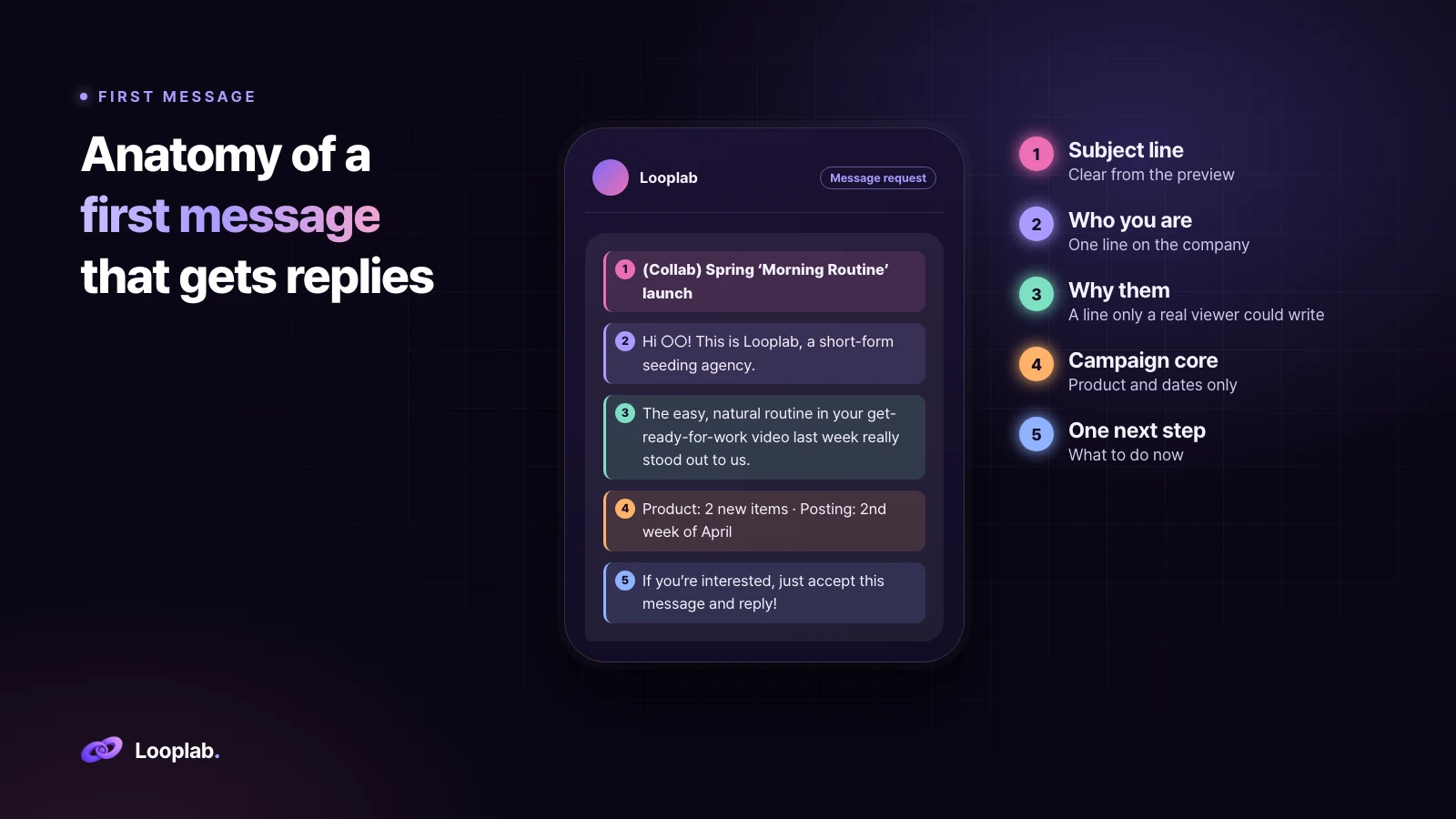
The third point is the one most often overlooked. Compliments like “love your content” could be sent to anyone, so they make the message look copied. One line about what you liked in a specific video is enough.
2. Adjust your message for new creators and those you have worked with
Even within the same campaign, you do not need to send every creator the same message.
When contacting a creator for the first time, trust comes first. Introduce your company and the campaign, ask whether they are interested, and then explain the details clearly. This helps the conversation flow naturally.
With a creator you have worked with before, the opposite applies. Introducing your company from scratch can make it seem as though you do not remember them. Mention the previous campaign in one sentence and get straight to the point.
“Your content did so well in our last campaign that we wanted to reach out to you first!”
That one line says more than a long introduction.
3. Questions about terms are part of the conversation, not a rejection
When a creator asks about the fee or schedule, it does not mean they are saying no. More often, it means they want to take part but need to check something first.
Answering in this order helps the conversation run smoothly.
Thank them for bringing it up.
Briefly explain the reasons behind the terms, such as the budget or schedule.
Offer what you can, whether that is an adjustment to the terms or a promise of a future opportunity.
There are also things to avoid. Do not compare their terms with those offered to other creators. Do not present schedules or terms as final before they are confirmed. If you send the wrong number or date, apologize and correct it right away. A late correction damages trust far more than a small mistake.
4. After confirmation, send a checklist, not just a link
Once a creator is confirmed, send the content guide. If you send only the link, some creators will start filming without reading the full document.
It helps to repeat the requirements in the message itself.
Posting dates, including the day and deadline: “by Fri, Oct 23, 23:59”
Three to five required elements: the key message, a shot showing the product, hashtags, and a tag for the official account
A title for each notice, like [campaign name + what this is about], so it is easy to find later
A guide is not there to control the creator. It sets clear boundaries so they can create in their own way with confidence.
5. Reminders and revision requests should help creators, not manage them
One reminder before the start and one before the deadline is enough. Several reminders on the same day can feel like pressure. If a deadline has passed, asking “When could you post?” and agreeing on a new date together works better than assigning blame.
When you ask for revisions, the order matters.
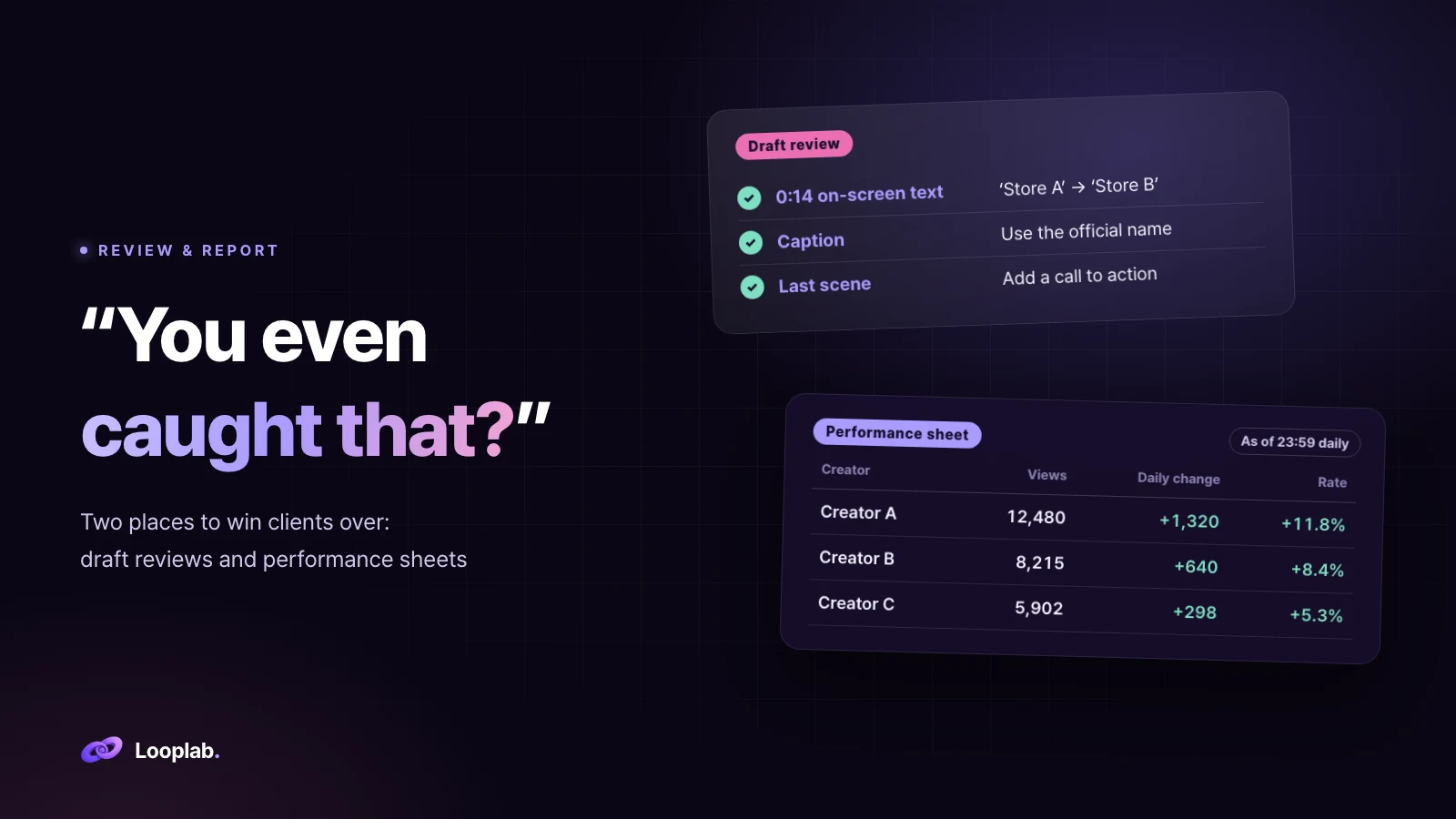
Start with something specific you liked.
List each requested change as a numbered item.
Provide the exact correction. For hashtags, include the correct spelling so they can be copied directly.
Ask them to reply once the content is updated.
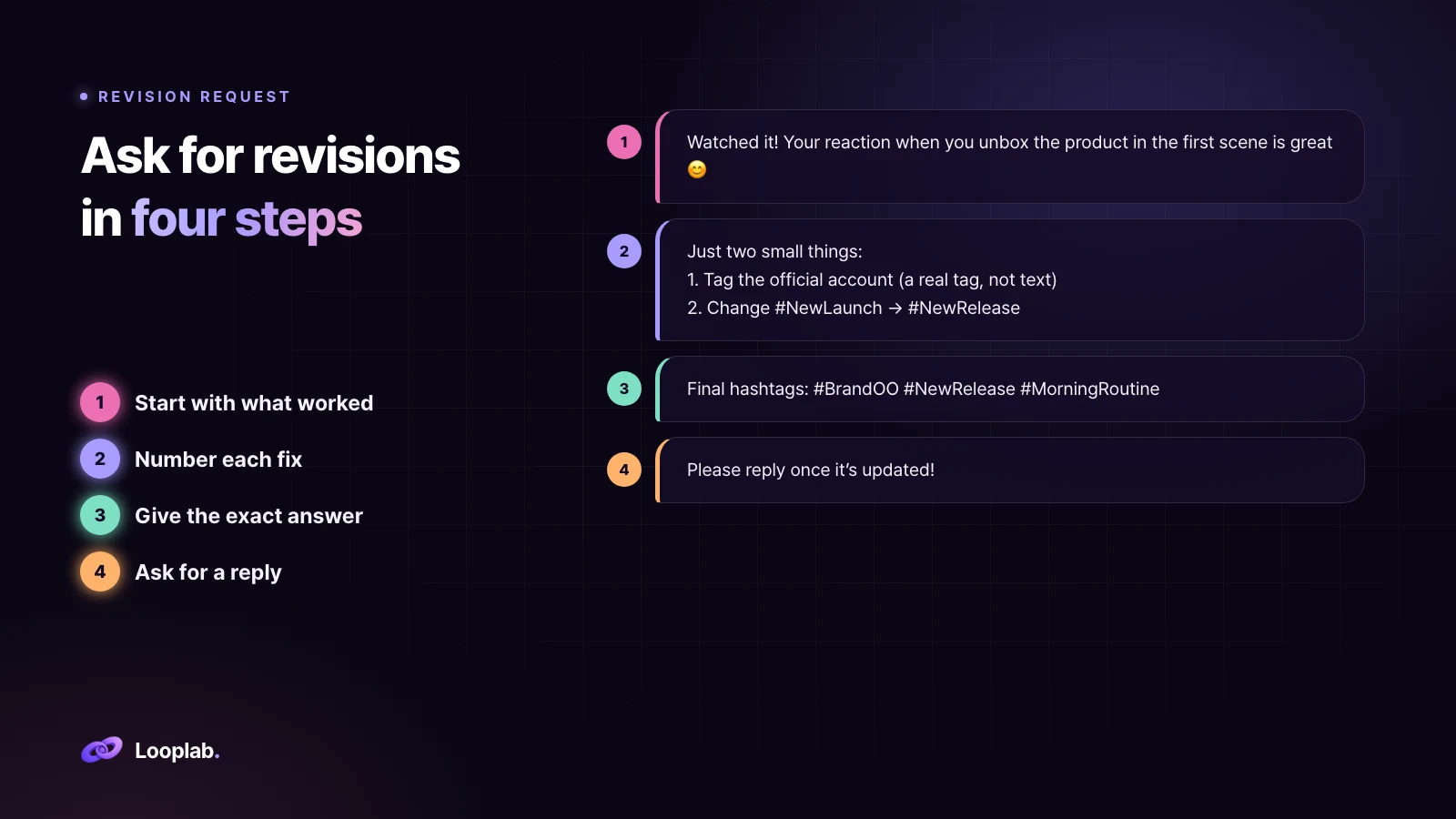
If nothing needs to change, say so clearly. A single line like “No changes needed” lets the creator post with confidence.
6. The wrap-up lays the groundwork for the next campaign
A campaign does not end when the content is uploaded. Keep the remaining details clear through the end, including the payment schedule and how long the content should stay up. Collect only the personal information you need for payment, and store it securely.
The wrap-up matters even when a creator cannot take part.
“Thanks for letting us know. When there is a campaign that fits your channel, we will reach out to you first.”
Then record why it did not work out, whether it was the schedule, terms, or category. That note becomes the starting point for your next offer.
A good DM does not just get a reply. It invites the next conversation.
Writing a good creator DM involves more than polishing sentences.
It means knowing who you are talking to,
discussing terms openly,
keeping the key points brief and clear,
and leaving room for another opportunity, right through to the end.
For Looplab, creator communication starts with treating creators as partners who help a brand find its message, rather than simply as recipients.
Good seeding starts with a good conversation.